THAIPUSAM
Thaipusam is a famous Hindu religious festival of faith, endurance and penance held each year at the Batu Caves in Selangor and in the Waterfall area in Penang.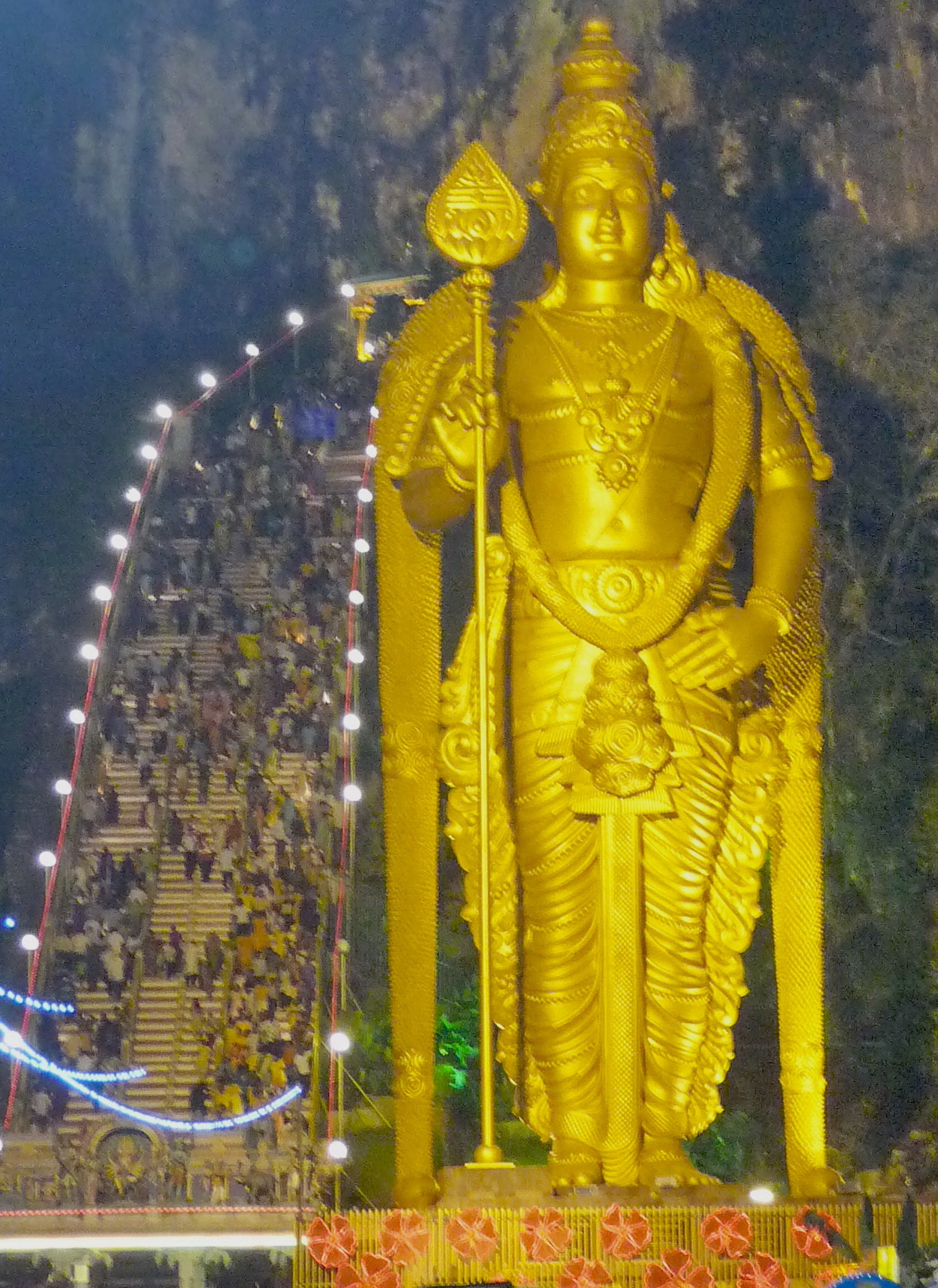
Thaipusam is an important festival observed by the Hindus of southern India during the Tamil month of Thai (January – February). It is also celebrated by the Tamil speaking communities in Malaysia, Singapore, South Africa, Sri Lanka and elsewhere around the world. The Thaipusam festival is held late January or early February depending on the alignment of the sun, moon and planets. In 2011 the Thaipusam date is January 20, 2011, Thursday. The Hindu festival of Thaipusam is about faith, endurance and penance dedicated to the Hindu god Murugan, the son of Shiva and Parvati.
It is believed that on this day, Goddess Parvati presented a lance to Lord Murgan to vanquish the demon army of Tarakasura and combat their evil deeds.
Thaipusam is therefore, a celebration of the victory of good over evil.
The festival of Thaipusam was brought to Malaysia in the 1800s when Indian immigrants started to work on the vast rubber plantations and in government offices. It was first held at Butu Caves in 1888. Since then it has become an important expression of cultural and religious identity to Malaysians of Tamil origin and it is now the most significant Hindu festival in the country.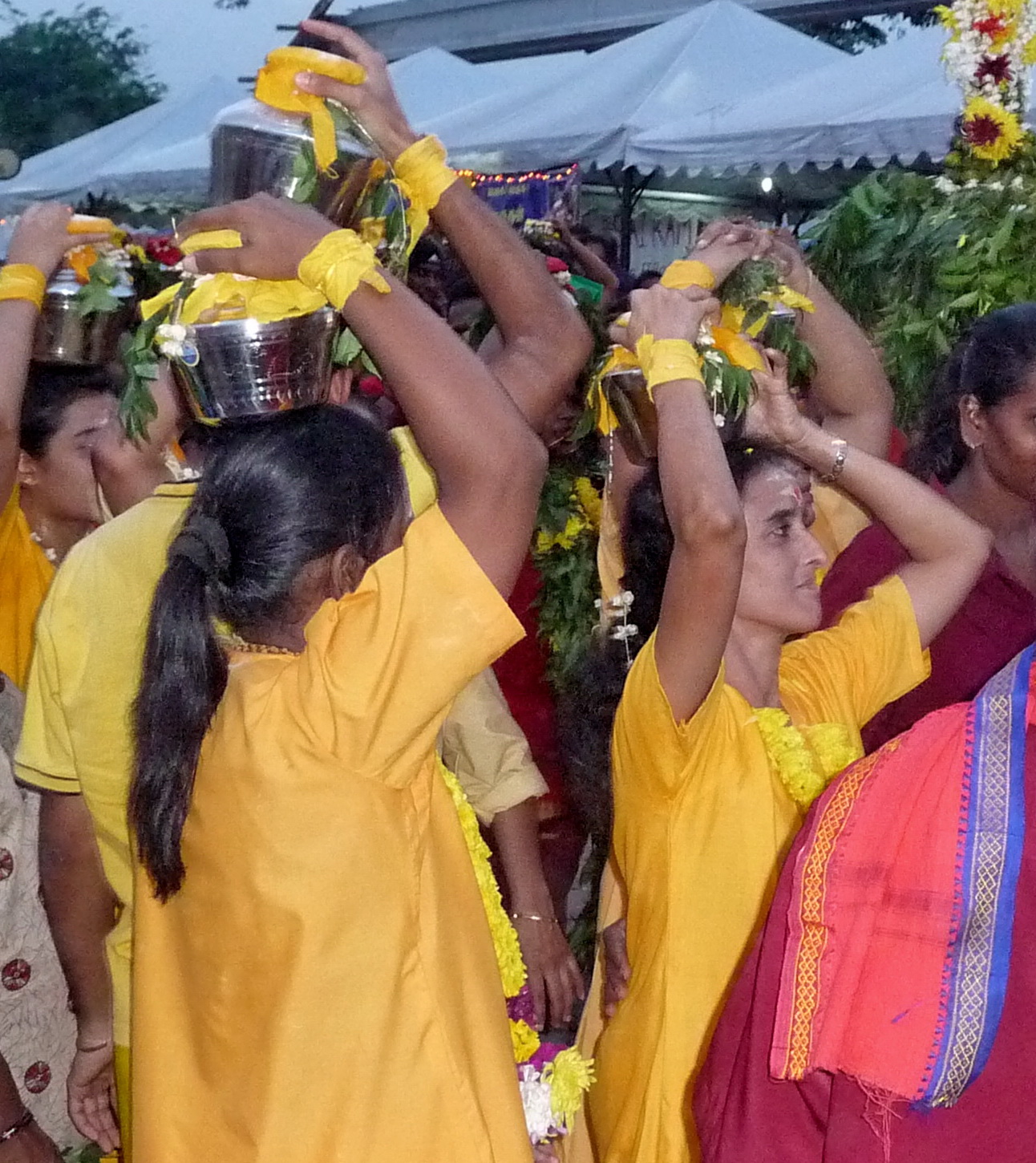
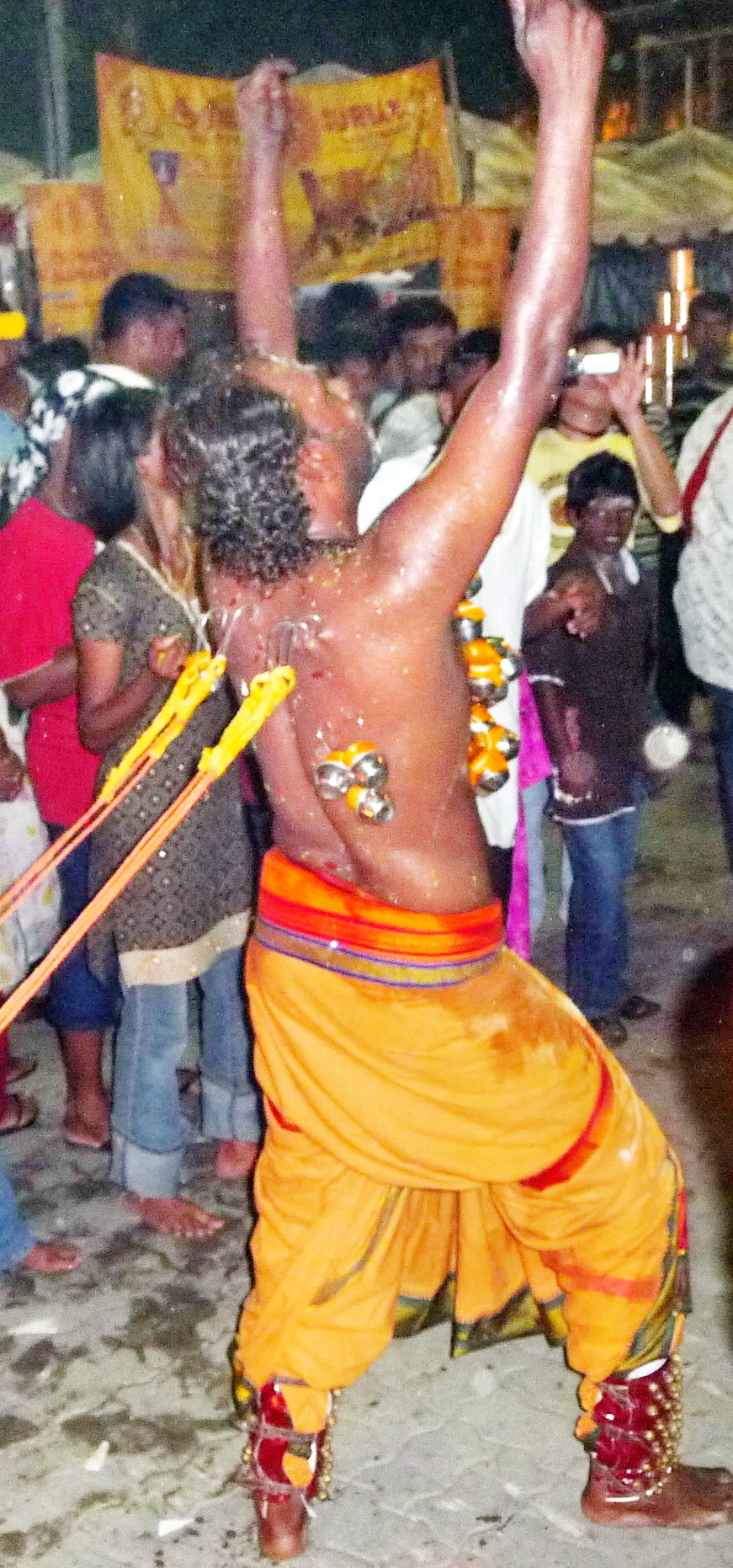
In Malaysia Thaipusam is a dynamic, happy and deeply devotional festival that attracts well over one million people to the Batu Caves over a three day period each year. The festival is also celebrated in Penang at two Hindu temples in the Waterfall area, namely the hilltop Arulmigu Balathanda-yuthapani Temple and Nattukottai Chettiar Temple. They will be the focal points for the devotees to fulfil their vows, offer thanksgiving prayers and penance to Lord Muruga and donate cash in kind to the needy. In 2009 the festival fell over the period Feb 7-9 with Monday, February 9 being declared a public holiday in its’ honour. The graphic pictures accompanying this article were taken by the author at the 2009 festival at Batu Caves.
During the festival, devotees of Lord Murugan offer fruit and flowers, milk and water to the Lord Murugan. This is a very colourful event. Women wear jasmine flowers in their hair and yellow and orange, the colours of Lord Murugan, dominate. Orange is also a colour of renunciation. 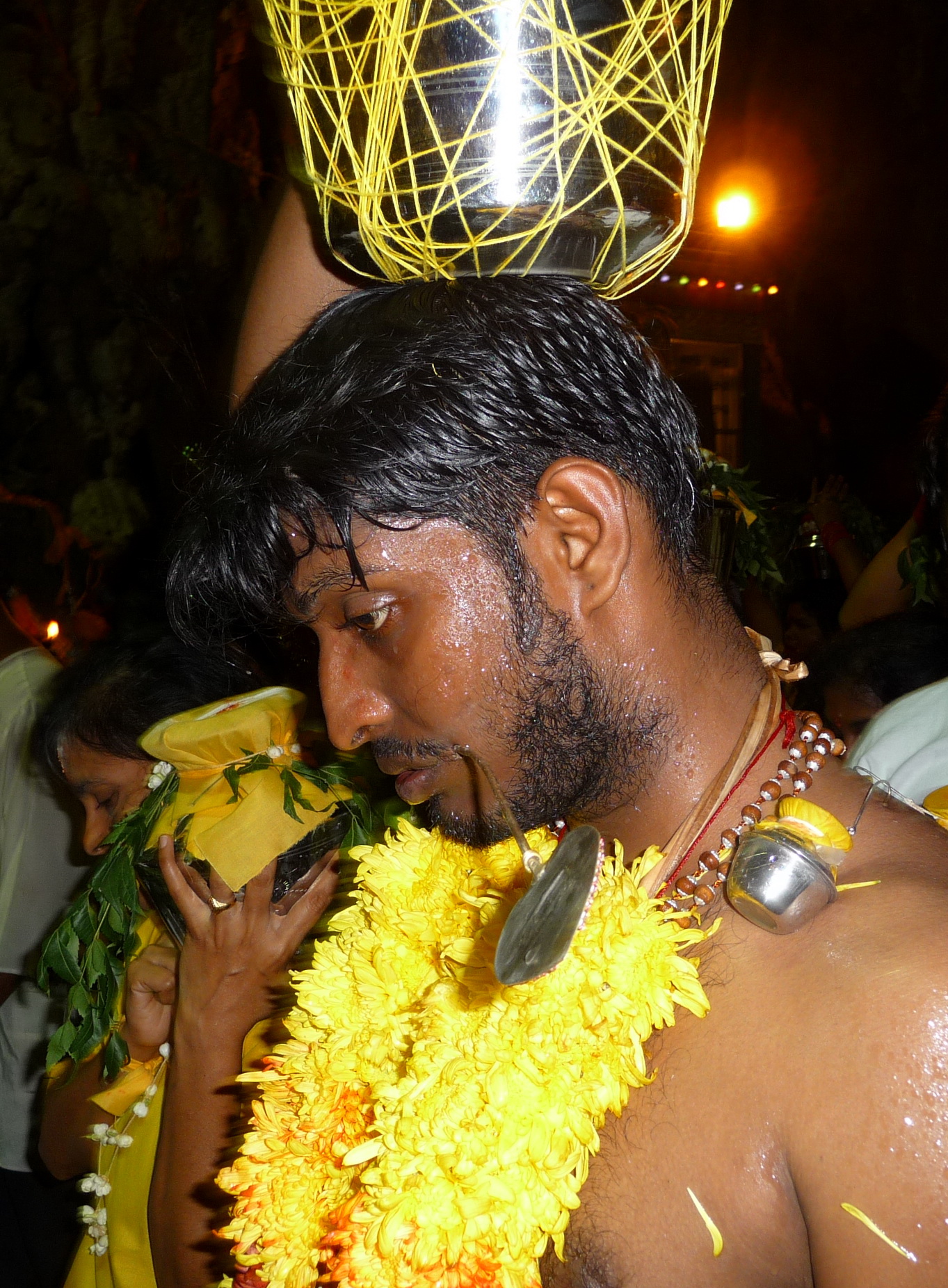
Many devotees carry an offering of milk in silver containers on their heads as a show of devotion and love for the God. Others carry elaborate frameworks on their shoulders called “kavadis” which have long chains hanging down terminating with hooks which are pushed into the back of the devotee. Kavadis are often covered with spectacular decorations and icons and most are also decorated with feathers of the peacock – the vehicle of Lord Murugan.
Body torture by devotees to appease the Lord Murugan is a major feature of Thaipusam celebrations. Body piercing with hooks, skewers and small lances called ‘vel’ is prevalent. Many of these devotees even pull chariots and heavy objects with hooks attached to their bodies. Many others pierce their tongue and cheek to impede speech and thereby attain full concentration on the Lord. Most devotees say they feel no pain because they are in a spiritual and devotional trance during such piercing induced by the incessant drumming and chanting of “vel vel shakti vel”.
Once the devotees have climbed all of the 272 steep steps to the temple at top in the Batu Caves, they have reached the climax of their pilgrimage.  They go into a final dance before an image of the God. That is the time energies are exchanged and devotees feel that they perceive the God but that the God also perceives them. Now the faithful can unload their kavadis, unhook themselves and perform final rituals and prayers. Their hope is that they will return to their usual lives refreshed and invigorated in their faith.
Thaipusam is a spectacular, colourful and deeply religious event held in an awe-inspiring location called Batu Caves. The location of the Hindu temples, at the foot and at the top of a fantastic staircase climbing steeply and deeply into the caves themselves, certainly adds meaning to the endurance and penance of the devotees who carry very heavy kavadis all the way to the top. These pilgrims, ably assisted by helpers who keep the crowds at bay and carry water for refreshment and a stool for the worshipper should they need a rest or two on the arduous climb to the top.
 Visitors to this spectacular festival will thoroughly enjoy being able to witness the traditions and culture of the Tamils in Malaysia first hand and will be made to feel most welcome by many of the participants. One of the real benefits of residing in Malaysia is that it is possible to easily witness this wonderful religious festival where so many devotees make such a dramatic statement of their faith and belief in their deity.
 Take only images....leave only footprints!